
What is Dyslexia Therapy?
Structured Literacy Intervention for Dyslexia
Dyslexia therapy at The Reading Teacher is grounded in structured literacy—an evidence‑based approach aligned with research on how the brain learns to read. Instruction is explicit, systematic, cumulative, multisensory, and responsive to each learner’s individual profile.
This service is designed for children, teens, and adults with dyslexia or significant difficulty learning to read, spell, or write despite appropriate instruction.
What Structured Literacy Means
Structured literacy instruction:
Teaches the structure of the English language directly and clearly
Addresses phonology, decoding, spelling, fluency, vocabulary, and comprehension
Follows a planned sequence while adjusting to the learner’s pace
Emphasizes accuracy, automaticity, and understanding
Instruction draws from Orton‑Gillingham principles and includes training in CONNECTIONS: OGin3D®, along with other evidence‑based practices aligned with the science of reading.
Important Notes
Dyslexia therapy is educational, NOT medical or psychological
Dyslexia testing may identify indicators of risk but DOES NOT provide diagnoses
This service does not replace school‑based instruction or formal evaluations, but is designed to complement them
Getting Started
If you are concerned about dyslexia or persistent reading difficulties, the first step is a consultation to discuss your learner’s history, needs, and goals.
-
One‑to‑one instruction
45–60 minute sessions
Multisensory, interactive lessons
Ongoing progress monitoring
Regular communication with families
Sessions are offered in‑person and virtually, with the same structured approach in both formats.
-
For meaningful progress, dyslexia therapy is typically provided:
2–3 sessions per week
Because reading development takes time and consistency, families enrolling in dyslexia therapy commit to a minimum of 12–16 weeks. This allows instruction to build systematically and supports accurate progress monitoring.
After the initial commitment period, services continue on a month‑to‑month basis.
-
Progress in dyslexia therapy is gradual and cumulative. Families can expect:
Increased accuracy and confidence with reading and spelling
Improved efficiency and reduced effort
Data‑informed adjustments to instruction
Clear communication about goals and growth
There is no quick fix for dyslexia, but with consistent, evidence‑based instruction, learners can make meaningful, lasting gains.
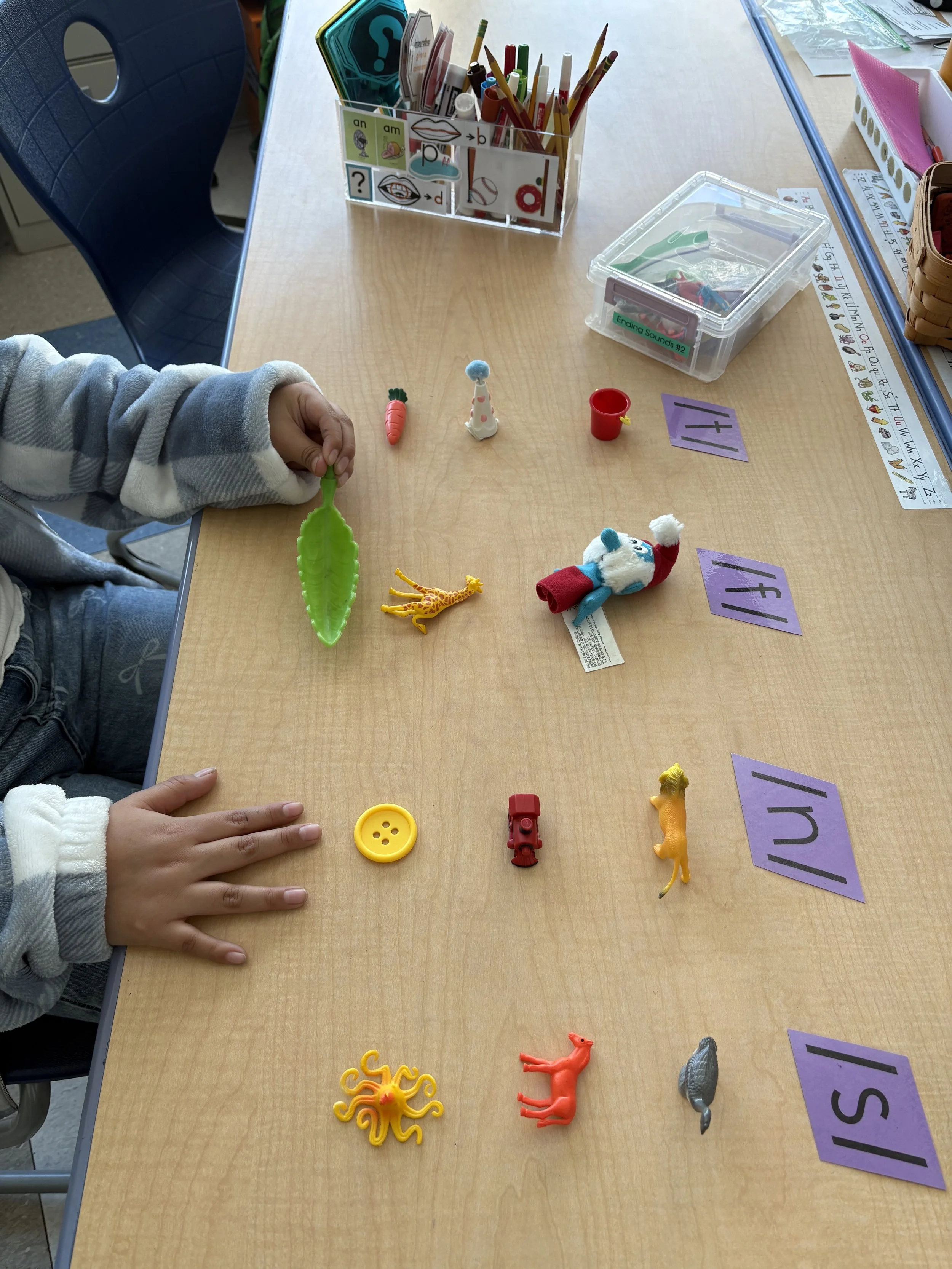
A student works to sort objects based on their ending sound.
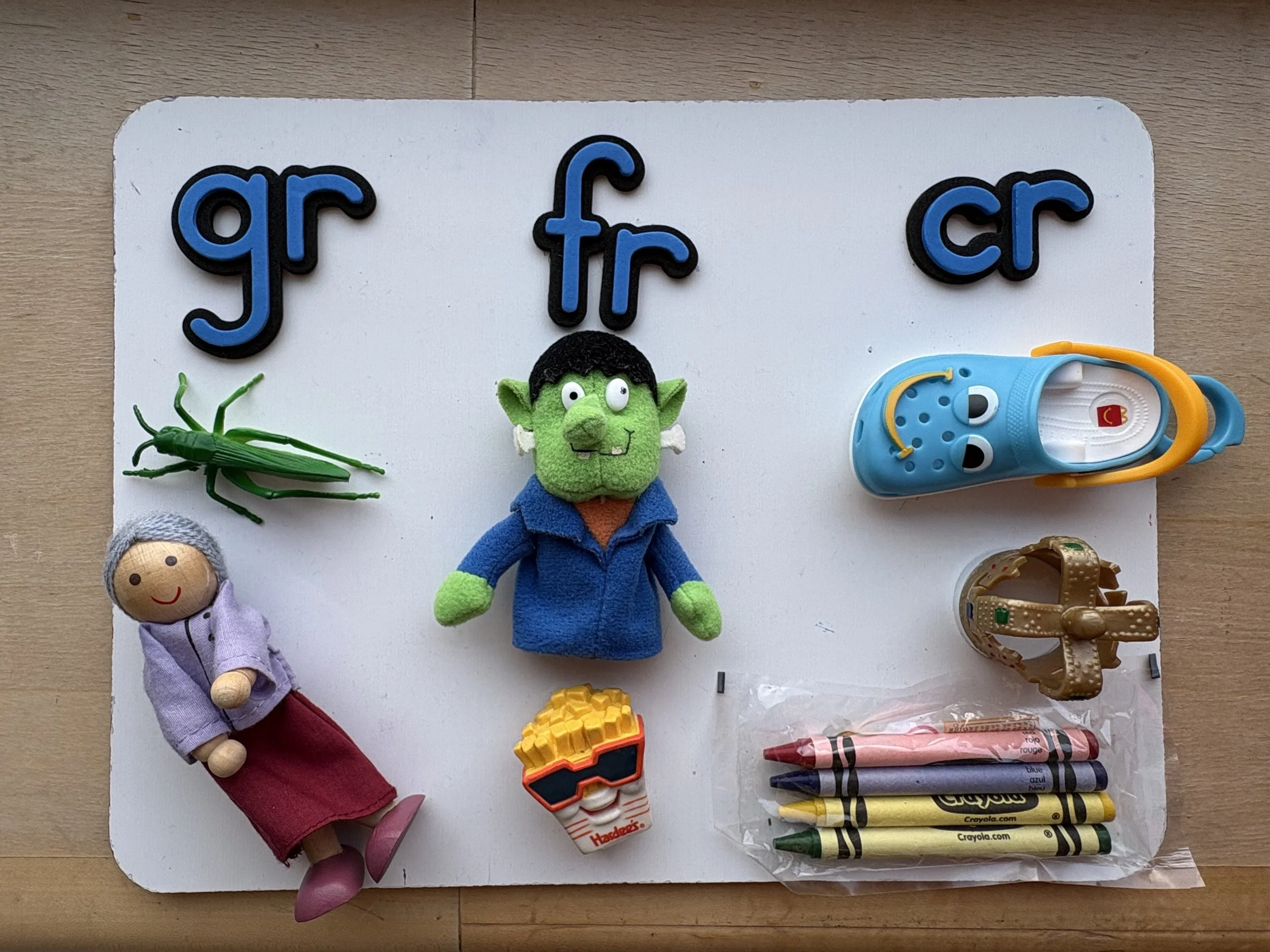
An object sort by initial blend.