
Testing and Guidance to Support Informed Next Steps
-
Reading or spelling progress has been slow or inconsistent
Reading requires significant effort
Difficulties persist despite instruction or intervention
An adult is seeking clarity about lifelong reading challenges
-
Individual testing/screening session (1.5-3 hours)
Review of relevant background information and rating forms
Analysis of skill areas related to reading and spelling
Written summary outlining findings and recommended next steps like intervention recommendations
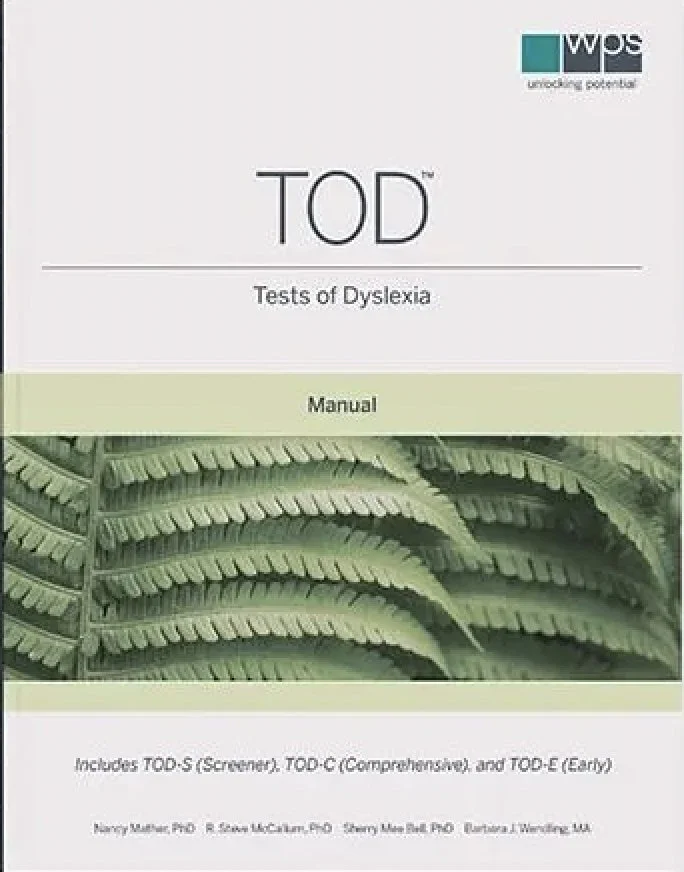
What are the Tests of Dyslexia (TOD®) ?
The Tests of Dyslexia (TOD®) are a group of assessments that help professionals understand how a student reads, spells, and processes language. There are three versions:
Screener (TOD-S): Quick check for possible risk
Early (TOD-E): For younger children learning early reading skills (Grades K-2)
Comprehensive (TOD-C): More detailed testing of reading and language skills (Grade 1 to adulthood)
The tests look at reading and spelling, how the brain processes language, and vocabulary and thinking skills. Parents, teachers, and students can also complete rating forms that give extra information, like family history of reading challenges or early speech and language development.
Together, the results help create a clear picture of a student’s strengths and challenges. This helps professionals decide if the child shows signs of dyslexia and helps them plan the best reading instruction and support.
The tests also provide detailed scores that help track progress over time and allow testing to be customized based on a student’s needs.
Dyslexia Testing
Dyslexia testing is designed to identify indicators of risk for dyslexia and related reading difficulties. Testing can be helpful for individuals—age five through adult—who are struggling with reading, spelling, or written language.
Important Note
Dyslexia screening and TOD® testing:
Identifies indicators of risk and probability of dyslexia
Does NOT provide a medical or psychological diagnosis
May help guide decisions about instruction, intervention, or referral for further evaluation